Introducing Red Bunny and Blue Bunny!

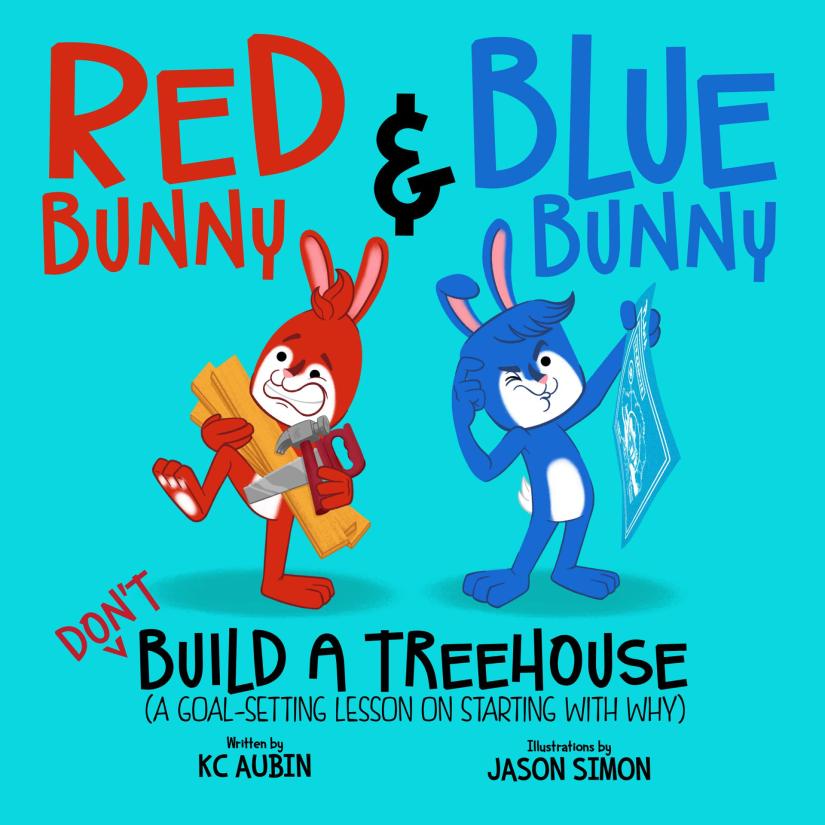
It’s here! Red Bunny and Blue Bunny (Don’t) Build a Treehouse (A Goal-Setting Lesson on Starting with Why) is now available for purchase on Amazon!

Look at that gorgeous cover! Doesn’t it just grab your attention right away? The bunnies are so cute and so full of character… You can’t help but feel charmed by them!

A number of people went into making this book possible… Jason Simon, the incredible illustrator who brought an amazing amount of skill and creativity in providing life and character to Red Bunny and Blue Bunny. Rebecca McKinney, the exceptional editor who not only provided editing services, but suggestions (and support!) that made the book so much better than what I originally sent her. My husband, who supported my dream from the beginning and let me bounce every bad idea I had off of him, while also never complaining about the countless drafts I made him read through. And my beautiful children, who listened to version after version of the story and made me feel like the stories were worth sharing with others.

If you picked up a copy of Red Bunny and Blue Bunny (Don’t) Build a Treehouse (A Goal-Setting Lesson on Starting with Why), thank you! I hope you enjoyed reading it. I certainly enjoyed writing it! And for more Red Bunny and Blue Bunny fun, I’ve got an Activity Pack I created to go along with the book that you can print out and share with your kids.

Hope to see you again next time, when Red Bunny and Blue Bunny (might) meet their hero, Captain Carrot!

Until then, thanks for reading!

KC

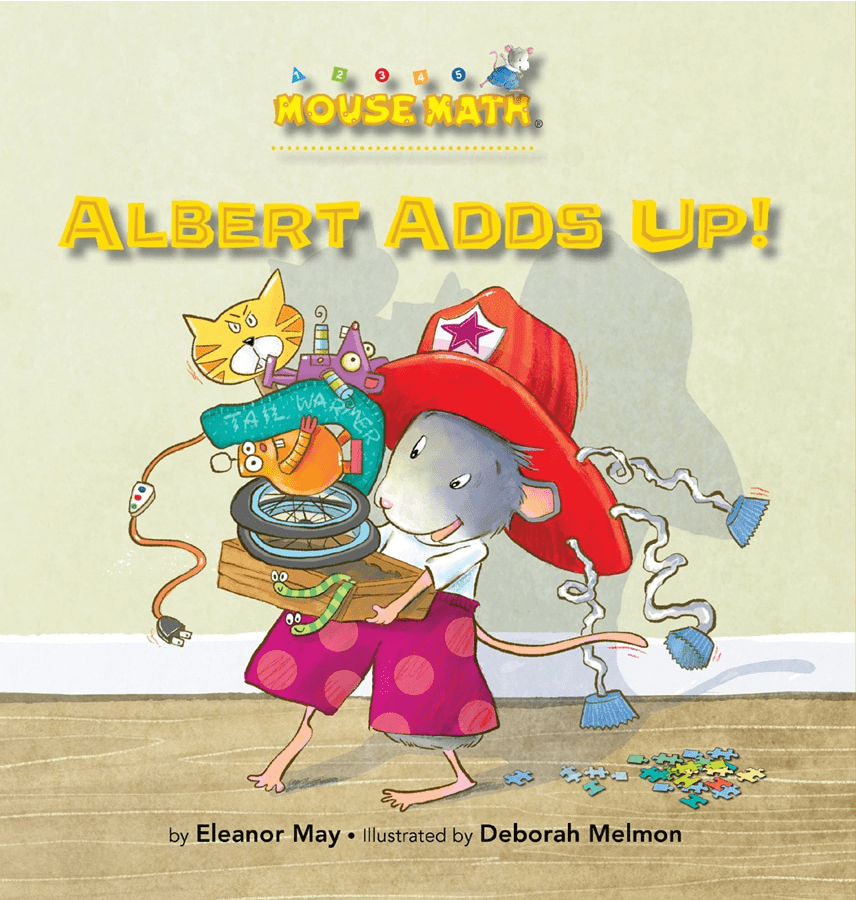
Albert Adds Up! – An approachable addition and subtraction lesson-in-a-story for kids

Math is boring. Or is it? In the super-cute and fun Albert Adds Up!, kids can get a realistic math lesson neatly layered within an engaging story.

Albert Adds Up! starts with Albert’s sister Wanda returning from the library with a book Albert wants to read. Albert immediately starts offering his toys to Wanda to trade in exchange for reading it first, adding more and more items to his trade pile. Several pages include illustrations with pictures and numbers that show how big Albert’s trade pile is growing so kids can correlate the number of toys with the actual numbers. Eventually, Wanda insists Albert starts taking toys away, and the subtraction starts, until Albert’s trade pile is reduced to zero.

My favorite part of this book was the interaction between Wanda and Albert. As Albert is continually trying to add items to trade to Wanda, she keeps trying to tell him she got the book for him, but gets distracted by the items he’s adding and asking him questions about them in a very cute way. Her distraction enables Albert to continue adding items to his trade pile, because he thinks “it’s not enough” for her to let him read the book first. I don’t like to use the term organic because for a while it got very over-used, but because of the sibling’s interactions, his trade pile is able to grow in a very organic way, allowing the math concepts to continue through the story.

I also have to give incredible kudos to the author and illustrator. They were able to create realistic and likeable characters that you could really understand in a math story! It’s so impressive. And, on top of the math lesson, there’s also a hidden lesson in the story about not interrupting and letting someone finish what they’re saying. Genius!

I will definitely be checking out more of the Mouse Math series, and I would highly encourage you to do the same!

You can download our lesson plan as a .pdf or read it below. I’ve also included links in the lesson plan to some materials I created for the activities.

Lesson

Albert Adds Up!

Albert Adds Up! (Amazon)

Vocabulary

  • Addition
    • Counting the total of two or more numbers together.
  • Subtraction
    • Removing one or more numbers from another number.

Summary

Math skills such as addition and subtraction are used all the time in everyday life. Addition is the act of adding something, while subtraction is the act of taking something away. The “something” can be a number, or it can be an item such as a toy.

Key Concepts

  • Addition is the act of adding something to something else.
  • Subtraction is the act of removing something from something else.
  • If you interrupt someone and don’t let them finish what they’re trying to say, you might miss something important.

Think Alouds

  • Can you think of a time during your day when you need to add or subtract something?
  • What would have happened in the beginning of the book if Albert had just let Wanda finish what she was trying to tell him?

Activities

Activity 1: Ten-frame 1-10

Materials

Instructions

  • Provide each kid with the paper with 1-10 written on it or the 1-10 Table Counter.
  • Have the kids practice adding and removing counters from the 10-frame and counting how many are remaining.
  • Optional: Have the kids write their results on the blank addition/subtraction sheet.

Activity 2: Toy Exchange Addition and Subtraction

Materials

  • 5-10 small toys per child, such as mini dinosaurs, action figures, balls, etc.
  • Optional: Blank piece of paper and pen OR a blank addition/subtraction sheet and pen (download the Fill-in Addition and Subtraction sheet pdf).

Instructions

  • Provide each kid with 5-10 small toys and place them into pairs.
  • Have them practice negotiating exchanging toys. (E.g., “I’ll give you this t-rex for your ball.”)
  • Have the kids count how many items they have.
  • Repeat.
  • Optional: Have the kids record their starting numbers, the numbers they added or removed, and the total result.

Activity 3: Read-along counters

Materials

  • Pre-step: Download the Albert Adds Up Toy Clips pdf. Laminate (optional) and cut into pieces so every kid has one of each picture.
  • Optional: Small box or container for the toys as a pretend toy box.

Instructions

  • Provide each kid with one of each toy piece or with the “toy box” with toy pictures in it.
  • As you read Albert Adds Up! have the kids play along, adding and removing toys from their “toy box” as Albert does in the story.
  • Practice counting the total with the kids as you read along.

Sallie Bee Writes a Thank You Note – The Importance of Saying “Thank You”

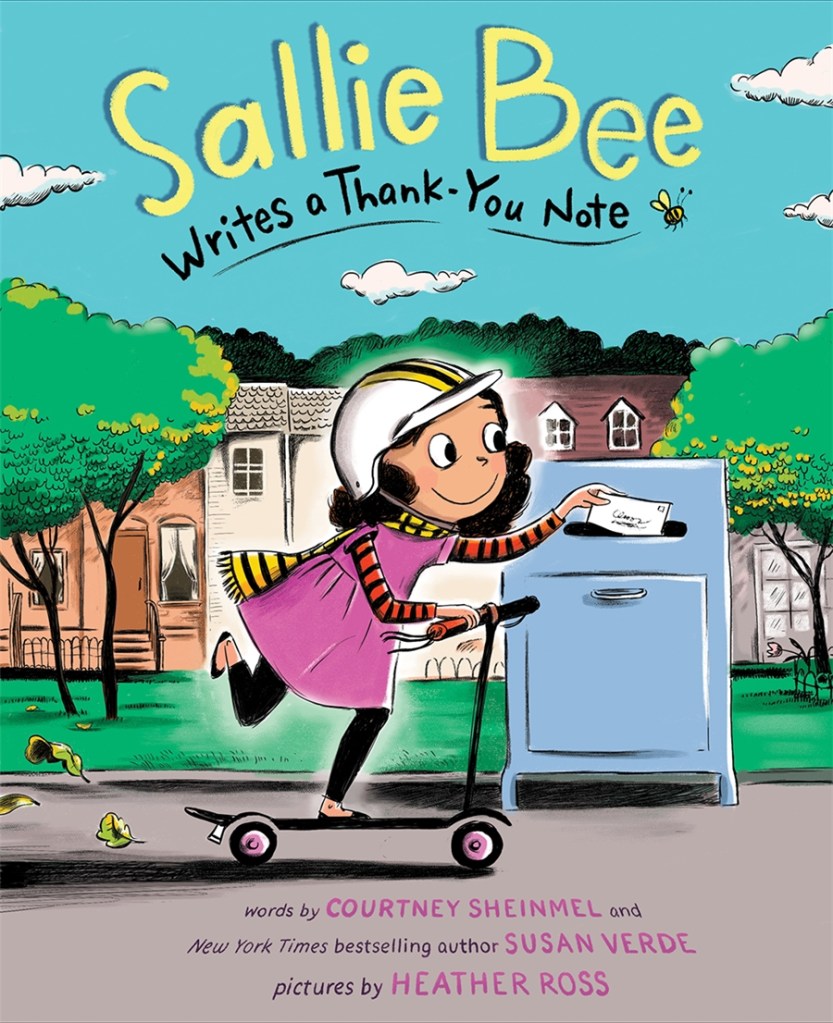
We’re always reminding our kids to mind their manners and say, “Please,” and, “Thank you.” Sometimes, “Thank you,” can become such an ingrained response that we forget what it really means. Sallie Bee Writes a Thank You Note is a friendly and approachable lesson-in-a-story that reminds you to take time to really think about why you’re saying “Thank you.”

Sallie Bee Writes a Thank-You Note starts off with Sallie receiving a hand-made scarf from her grandmother. Sallie writes her grandmother a thank you note using a “formula” of sorts–being specific about why you’re saying thank you and letting the person know how what they did made you feel. She enjoys writing her thank you note so much, she looks for more reasons to write thank you notes through the rest of the book, using her formula.

I really enjoyed reading this book to my kids. I really liked that Sallie didn’t just write a thank you note for receiving a present, but she also wrote them for acts of kindness she received through the book. It’s a really approachable way to remind kids they have a lot of reasons to be thankful–not just when they receive presents. And the kids really seemed to have fun with the activities we did around this book, which reinforced the ideas and themes of being grateful and saying thank you.

But I have a confession to make. As I was working on this lesson, I had an epiphany. One reason I wanted to do a lesson on this book for my kids was because they can be very ungrateful, and I wanted to teach them about gratitude and what it truly means to be thankful and blessed.

While I was coming up with examples for reasons they have to be grateful, I realized something that shocked me: I am grateful they are ungrateful, because it means their lives are so wonderful and blessed they don’t know how truly good they have it.

At that moment, I felt my frustration at their lack of gratitude slip away, replaced by my own sense of gratitude that my husband and I have been able to provide such a great life for our kids. While I still think it is critically important for them to be grateful and to understand they are very lucky and blessed, I am approaching it from a place of happiness and joy instead of frustration.

My own example, I think, shows just how critical gratitude is to happiness, and that we can always do more to understand how good we have it.

You can download our lesson plan as a .pdf or read it below.

Lesson

Sallie Bee Writes a Thank-You Note

Sallie Bee Writes a Thank-You Note (Amazon)

Vocabulary

  • Grateful/Gratitude
    • Being thankful; showing appreciation for someone or something.
    • Generally gives a feeling of warmth that stays with you.
    • “Gratitude is an attitude” – more of a state of mind than being thankful. A realization that you are lucky to have what you have.
    • Gratitude can change your perspective on frustrations if you reframe it.
  • Thankful
    • Being grateful or happy for something someone did or something you received.
    • Generally a temporary feeling directed at something someone did for you or something you received.
  • Thank you note
    • A note sent to someone to convey thankfulness at something they said or did.

Summary

Parents teach us at a very young age to always say “please” and “thank you.” Saying “thank you,” is an almost automatic response when someone says or does something nice for you. But taking the time to really appreciate someone makes them feel good and also helps you understand behaviors you do and don’t like that you can then apply when dealing with others.

Key Concepts

  • Saying “thank you” is a way to show someone you appreciated/liked what they did.
  • Be specific about your thank you–tell the person exactly what they did that you are thanking them for, and why you are thanking them for it.
  • When thanking someone, tell them how what they did made you feel.
  • Understanding why you appreciated something someone said or did can help you understand how you want to treat others. (E.g., If someone did something nice for you, and it made you happy, you can do something nice for someone else to make them happy.) It also encourages the person to continue to do nice things.
  • There are subtle differences between being thankful and being grateful, but thankful is generally a temporary feeling related to something someone did, and being grateful is generally related to a feeling that stays with you.

Examples

  • You are thankful that Mom or Dad got you a drink. You are grateful that you have family who loves you and cares for you.
  • You are thankful your sister or brother shared your toy. You are grateful you have someone to play with.
  • It is hard to explain how to be grateful without also explaining the alternatives. I would encourage you to share with your kids what you feel comfortable sharing and you think they can process. For example:
    • We are lucky to live in America. Some people in other countries travel on foot for MILES, carrying just a bag of what they own, through dangerous terrain, just to have a chance to live here.
    • We have access to clean, safe water. Some people don’t. They have to drink water people and animals have bathed or pottied in.
    • We can walk, run, climb, and play. Some people are sick and can’t move around at all.
    • We have a beautiful house filled with toys and clothes and love. Some people don’t.
    • We have access to doctors and medicine when we get sick. A long time ago, before scientists could study diseases, there were no medicines and people just had to suffer.

Think Alouds

  • Why is it important to say “thank you”?
  • Can you think of a time you’ve wanted to say “thank you” to someone? Did you?
  • How do you think the people who received Sallie’s “thank you” notes felt? How would you feel if you received a “thank you” note?
  • What were the elements to Sallie’s thank you notes?
    • A recipient (person to thank).
    • A specific reason for the thank you note that includes what the person did and why she was thankful for it.
    • How what the person did made her feel.
    • Her name.
  • Why do you think it’s important to be specific when telling someone what you’re thankful for?
  • Why do you think it’s important to tell someone how what they did made you feel?
  • Can you think of something you feel thankful for? Can you think of something you feel grateful for?

Activities

Activity 1: Understanding Your Thank You

Materials

  • None

Instructions

  • Ask the kids to think about a person they thanked recently.
  • Ask them who the person was and what the person did.
  • Ask the kids why they were thankful for what the person did.
  • Ask the kids how they felt about what the person did.
  • Ask the kids if they can think of ways to imitate what the person did with their friends.

Activity 2: How Many Things Are You Grateful For?

Materials

Instructions

  • Pre-step: Print as many copies of the Sallie Bee Writes a Thank-You Note Reasons to be Thankful Counter worksheet as you need. Alternatively, write “How Many Things Are You Thankful For?” at the top of the paper and add an empty box next to it. Optional: Add a 10 or 20 frame box to the paper.
  • Ask the kids to think about how many reasons they have to be thankful. (E.g., a friend came over to play, they made a goal in soccer, their mom or dad bought them their favorite juice, etc.)
  • For every reason they can think of, have them make a mark on the paper with the pen OR add a counter to the paper.
  • When the kids can’t think of any more reasons to be thankful, ask them to count up how many marks or counters are on their paper and write the number in the box.
  • Point out how lucky the kids are to have so many reasons to be thankful.

Activity 3: Write a Thank You Note

Materials

  • Paper or cards
  • Markers or crayons
  • Optional: Stickers
  • Optional: Envelopes

Instructions

  • Ask the kids to identify one person they want to write a “thank you” note to.
  • Provide the kids the materials, and ask them to write a “thank you” note including:
    • Who the person to be thanked is.
    • What they did to receive the thank you card.
    • How the child felt about what the person did.
  • Optional: Let the kids decorate the cards and address the envelopes to the recipient.

Additional Videos/Books

Elmo’s Best Thanksgiving Ever

Sallie Bee Writes a Thank-You Note Reasons to be Thankful Counter background image courtesy of Pixabay. Image available here: https://pixabay.com/illustrations/thank-you-polaroid-letters-2490552/.

Howard B. Wigglebottom Learns to Listen Book Activities

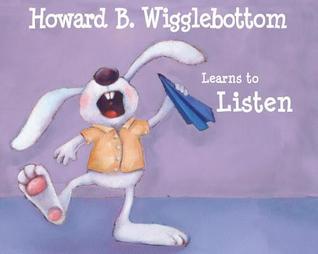
Need a refresher on why it’s important to listen? Looking for some activities to encourage listening with your kids? (So did I…) Luckily, Howard B. Wigglebottom Learns to Listen is a great read on the importance of listening, and the consequences that follow when you don’t!

Howard B. Wigglebottom Learns to Listen follows Howard, a little bunny rabbit who just can’t seem to listen! He doesn’t listen at story time, and instead bounces his ears straight into a fan. He doesn’t listen to his friends at the cafeteria and slips on a banana peel. He doesn’t listen while playing and takes a baseball to the eye. Howard gets tired of getting in trouble for not listening, so he resolves to do his best to listen, and gets rewarded for his efforts with a gold star and extra play time at home.

Howard B. Wigglebottom Learns to Listen is a quick read with only a few sentences per page, paired with entertaining pictures of the mishaps Howard gets into because he doesn’t listen. I liked that it showed lighthearted consequences to not listening, because so often when I tell my kids not to do something, I’m met with, “Why?” This book illustrates “why” perfectly.

I didn’t really create a lesson plan around this book, because my kids already understand what listening means, and there wasn’t really anything to explain. Instead I just gathered up activities that reinforced listening skills. My 4 year old had a great time with them, but my 2 year old didn’t quite understand what she was supposed to be doing. For example, my 4 year old caught on very quickly to, “Do As I Say, Not As I Do,” but my 2 year old kept doing what I was doing until she saw what her brother was doing and started copying that. We played it at the dinner table, too, and instead of listening to my instructions, she just watched what her dad and brother were doing and did that. She also struggled with “Mother, May I?” and after she asked if she could take two steps, just took two steps. So I think we’re going to have to work on that. (Haha!)

Below are the listening activities we did to go along with the book. Enjoy!

Lesson

Howard B. Wigglebottom Learns to Listen

Activities

Activity 1: Mother May I

Materials

  • Open space

Instructions

  • Have your kids stand on one side of the room while you stand on the other with your back to the kids.
  • Taking turns, one kid starts and asks, “Mother May I take x steps?” (where they fill in the ‘x’ number.)
  • You say, “Yes, you may,” or, “No, you may not, but you may do x instead,” (where ‘x’ is your own suggestion).
  • The first kid to get to you wins.

Wikipedia rules for Mother May I?

Activity 2: Red Light, Green Light

Materials

  • Open space

Instructions

  • Have your kids stand on one side of the room while you stand on the other side.
  • Call out, “Green light!” and turn around so your back is to the kids.
  • The kids race to you as fast as they can until you yell out, “Red light!” and turn around so you’re facing the kids again.
  • Anyone who moves while you’re facing the kids is “out” and either has to return to the starting line or sit out the rest of the game.
  • Call out, “Green light!” and turn around again so your back is to the kids.
  • The kids race to you as fast as they can until you again yell out, “Red light!” and turn around so you’re facing the kids.
  • Anyone who moves while you’re facing the kids is “out” and either has to return to the starting line or sit out the rest of the game.
  • Repeat until one of the kids reaches you.

Wikipedia rules for Red Light, Green Light.

Activity 3: Do As I Say, Not As I Do

Materials

  • Open space

Instructions

  • Have the kids face you with enough space around them to move.
  • Say, “Do as I say, not as I do! Jump up and down!” but instead of jumping up and down, you sit down.
  • Continue with conflicting words and actions until the kids get bored.
    • You can also have everyone stand in a circle and take turns being the caller.

Extension

  • You can play this anywhere! Even at the dinner table. It can be good for a laugh.

Activity 4: What do you hear?

Materials

  • None

Instructions

  • Have the kids sit silently for a minute. You can either use a timer or just go until the kids can’t take it anymore.
  • Ask the kids what they heard.
  • Have the kids sit silently again.
  • Ask the kids if they heard anything else/different.

Videos/Books

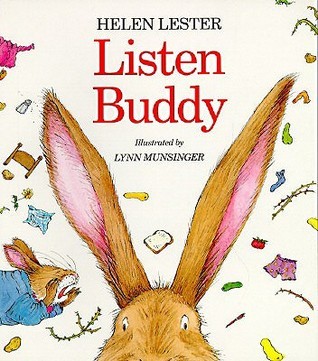
Listen, Buddy (Amazon)

Another book on the importance of listening, featuring another rabbit! Buddy doesn’t listen to anyone, and often misunderstands what he does hear with humorous results. When Buddy doesn’t listen to his parent’s directions and ends up at the home of the Scruffy Varmint, his difficulty listening angers the Scruffy Varmint into trying to make him into soup! Lesson learned: Buddy listens after that.

Living Books and the Birth of Red Bunny and Blue Bunny

I discovered the concept of living books by accident.

My four year-old couldn’t get to sleep one night. It had been raining for days, so we couldn’t go to a playground and play and had basically turtled-up in our house. So while we lay together, I began telling him a story about two bunnies named Red Bunny and Blue Bunny whose burrows had been flooded. Some squirrels, seeing the bunnies’ plight, quickly used a pulley-system to help the bunnies out of the flood and up into their homes in the trees. Thus began a friendship that culminated in a huge party thrown by the bunnies to thank the squirrels for their help and hospitality.

My four year-old loved the stories, and thus began an almost-nightly storytelling time. At a loss for new ideas, I decided to tell some stories focusing on some problem behaviors I wanted to work on with him. (Namely asking kids, “Can I play with your toy?” at the playground instead of, “Can I play with you?” And giving up when he couldn’t do something immediately.)

One of the stories I told was about Blue Bunny and his baby sister Baby Blue Bunny. My son hadn’t been playing very well with his younger sister, and so I told him a story about Blue Bunny realizing Baby Blue Bunny was really fun to play with. The next day, to my astonishment, my son was surprisingly nice to his sister, even including her in his play.

Encouraged, I tried again. And again. And I was shocked to see the difference in his behavior after these stories. It sent me on a quest to find more books on the topics I wanted to work on with him. I typed things like, “Perseverance picture books,” into Pinterest, and, “Friendship picture books.” And that led me to discover this concept of “living books.” Books that teach through stories rather than dry facts.

(It also led me to a homeschooling curriculum called “Book Shark,” that I haven’t purchased, but I adore the idea of it and looking into it really got my brain turning.)

I had been trying to teach my son some lessons already about goal-setting, but they weren’t taking. He was bored, not listening, and couldn’t remember what I had said even ten minutes later. I was discouraged, but didn’t give up. Instead, I started using stories to teach him the lessons I wanted him to learn, and was stunned to see how well he took to them. Using entertaining stories helped him pay attention to the lesson, and conversations during and after helped the lesson stick.

It was this discovery that led me to wanting to write my own children’s books. I had never considered writing a children’s book, but I realized the concepts I was trying to instill in my children weren’t on the bookshelves. (That could be because I’m horrible at searching for things online and there aren’t enough hours in my life to go through every book in the library.) And thus, living books led me to writing Red Bunny and Blue Bunny, weekly visits to the library, and a definite improvement in my son’s behavior and understanding.

I haven’t looked back. It had been years since I’d been in a library, but now we’re almost weekly-visitors. (I forgot how much I LOVE the library. Isn’t it amazing being surrounded by all those books?) Using a combination of Pinterest, online searches, and just general bookshelf-browsing, we’ve covered all sorts of topics that I see him incorporating all the time.

If you haven’t tried using stories to teach your kids, I highly recommend it! Kids love stories, so why not include ones that teach them something while entertaining them?

Happy reading!